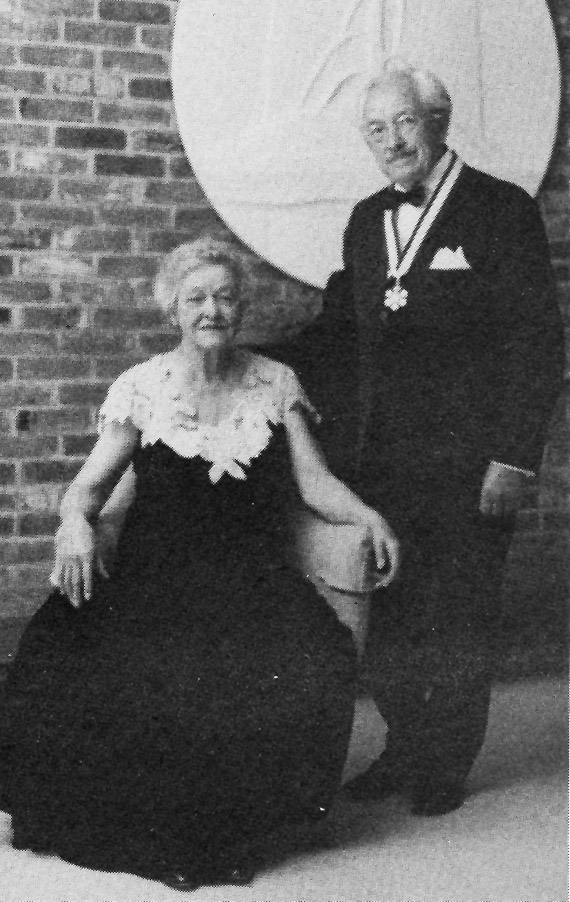
(1903 – 1988)
“Night train to Montreal with Frances James.” {January 9 1951}
“Arr. Montreal. Staying Laurentian Hotel. Recording for short-wave broadcast in L’Hermitage, produced by Patricia Fitzgerald, & to be broadcast to England & S. Am. on 18th.” {January 10 1951}
“Concert with Frances James in Chateau Frontenac Ballroom for Quebec Women’s Music Club. Reception at a University Club after.” {January 12 1951}
“Concert with Frances James, Kings Hall, Compton, attended by Prime Minister’s sister, & night train from Sherbrooke to Saint John. I play a group of Chopin.” {January 14 1951}
“Concert with Frances James in Museum, Saint John. Kelsey Jones accompanies his own songs. Reception for the whole audience after …” {January 17 1951}
These entries represent a synopsis of some of the musical interactions between George and Frances James. In another section on this website, their 1949 tour to western Canada (which included violinist Murray Adaskin) has already been outlined – see “Late 1947 to Mid 1950” – and the story of their recording of Hindemith’s Das Marienleben in late 1950 is told in its own Spotlight, close at hand.
A little more, then, about soprano Frances James. As with George, shedding light on Frances’ professional life opens a few more pages in the book that tells the story of Canada’s developing musical countenance in the twentieth century.
Much of what I write here owes its existence to the well-researched and fascinatingly informative book by Gordana Lazarevich The Musical World of Frances James and Murray Adaskin.

Frances James was truly Canadian in both her education and her choice of where to live her life as a musician. Born in Saint John New Brunswick, she received most of her musical training in Montreal. She emerged as an accomplished singer at just the perfect time to make a significant contribution to Canada’s cultural development. And Canada reciprocated, by providing her with opportunities to further her artistic growth. Her rise as one of the country’s leading concert artists owes a great deal to two major Canadian institutions: the Canadian Pacific Railway and the Canadian Broadcasting Corporation.
“Train with Frances James – to Winnipeg.” {November 14 1951}
“Winnipeg – Regina & the Saskatchewan Hotel. A short rehearsal in Knight Wilson’s studio at Regina College.” {November 17 1951}
“Regina Symphony Orchestra concert in Darke Hall – Frances sings with orchestra & a group with piano. Reception at the Knight Wilsons’ & met Richard Watson, newly arrived from England & head of Regina College.” {November 18 1951}
“Women’s Music Club Concert with Frances James in Darke Hall, Regina.” {November 19 1951}
“Train Regina – Moose Jaw – Grant Hall Hotel. Evening concert with Frances James in Baptist Church – with a baby Heintzman Grand & a very narrow stage.” {November 20 1951}
“Concert with Frances James – Banff School auditorium, & reception at the Cascade Hotel, given by Junior Chamber of Commerce & on to the Whytes after.” {November 23 1951}
“Concert with Frances James – Civic Theatre {Nelson B.C.} – new Heintzman Grand & a small audience …” {November 26 1951}
“CBC broadcast 1-1.30 – Mozart, Scarlatti, Brahms, Chopin. Frances’ broadcast with orchestra later.” {Vancouver B.C.} {November 29 1951}
“Calgary to Red Deer (Buffalo Hotel) & concert in the new auditorium. Baldwin Grand – old”. {December 3 1951}
“Concert in Yorkton Collegiate auditorium – Mason & Risch Upright – very resonant hall.” {December 6 1951}
“To Marathon & concert in the Recreation Hall – & a Heintzman Boudoir Grand reconditioned. Reception at Everest Hotel.” {December 8 1951}
“To visit the embryonic golf course in Marathon to be completed next spring $90 000.
Marathon – Toronto.” {December 9 1951}
The Canadian Pacific Railway played a colossal and formative role in developing Canada’s cultural identity. In this the charge was led by a real powerhouse in the person of the CPR’s energetic general publicity manager from 1913 to 1945, John Murray Gibbon.
The CPR (incorporated in 1881) needed public support in order to survive; the growth of tourism was therefore essential. To this end, at the turn of the century, the great CP hotels (Château Lake Louise, Banff Springs, Château Frontenac and Empress among them) were erected across the country – grand and elegant establishments that attracted wealthy tourists whose expectations included luxurious accommodations and high quality entertainment. One amenity offered to them was first-class musical performance.
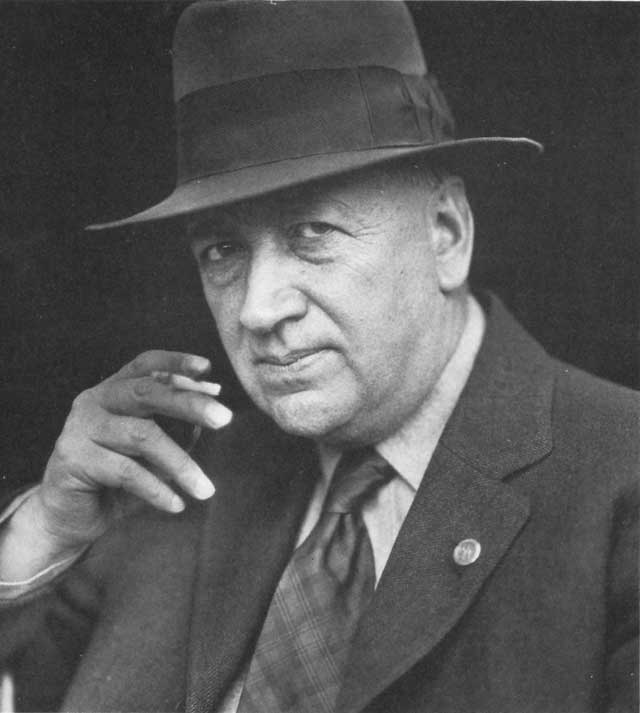
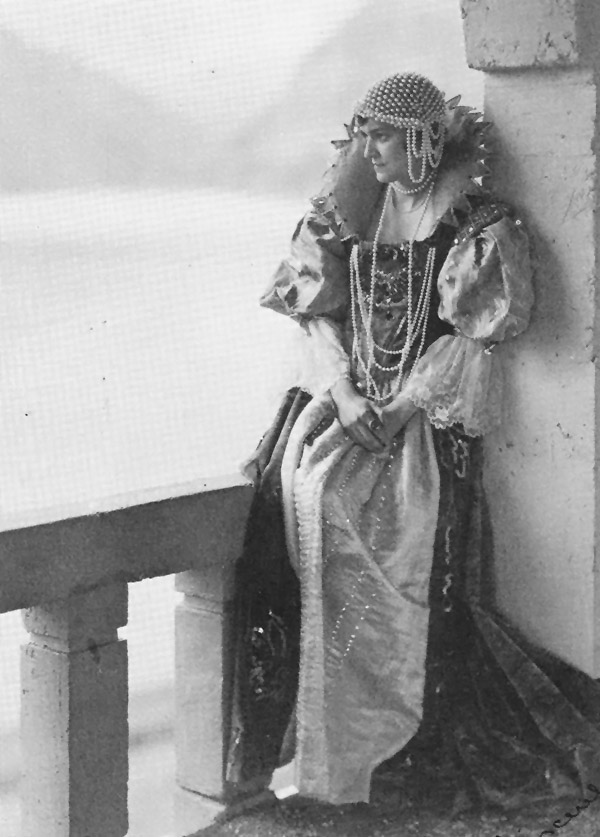
Lake Louise, Alberta
A talented visionary, John Murray Gibbon had a keen sense for spotting fresh talent. Once he discovered the exciting vocal capabilities of the young Frances James, she never lacked work as a singer; she participated in musical events of all sorts sponsored by the CPR from folk to classical, in varying formats ranging from “Rocky Mountain powwows” to formal classical concerts. During her employment with the CPR (beginning in 1925 and lasting till the early 1940s) she became the leading recitalist at the Banff Springs Hotel and developed a reputation that was recognized right across the country.
James’ reputation eventually extended far beyond her work with the CP hotels; she became valued as an important Canadian singer and a star performer, engaged by diverse musical organizations. By the time her association with the CP hotels had ended, she had much else to take its place.
“Night train to Montreal with Frances James.” {March 14 1952}
“Montreal – Compton & a recital at King’s School with Frances. Night train from Sherbrooke – St. John.” {March 15 1952}
“Arr. St. John … Concert with Frances at Netherwood.” {March 16 1952}
“To a lunch at … & in the evening a short recital with Frances in Ted Campbell’s studio – in aid of the St. John Symphony Orchestra.” {March 18 1952}
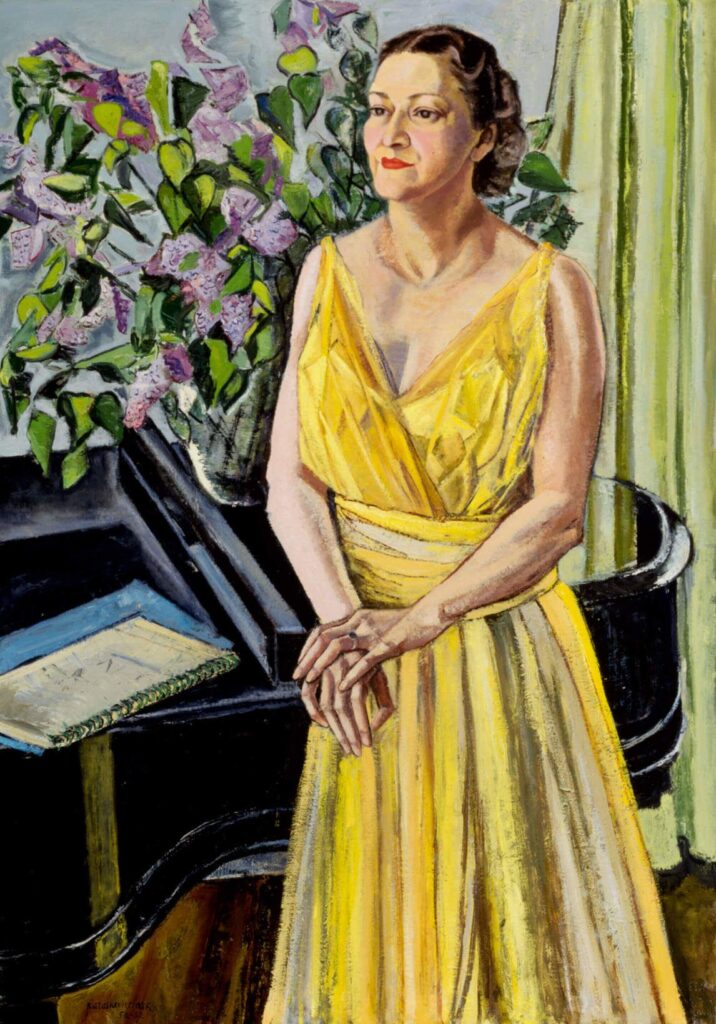
As with the CPR, so with the CBC. The Canadian Broadcasting Corporation played an absolutely fundamental role in uniting the country, in all times since its inception but especially during World War II.
The CBC was established in 1936. During the war years, radio dramas, radio operas and other programs designed to foster nationalist sentiments – as well as much other music in other genres – gave Frances James ample opportunity to shine as a radio artist. Not only that, but through its enlightened policies in supporting Canadian culture during the 1940s and 1950s, the CBC became a major source of commissions of Canadian works. In this James wholeheartedly participated, making it her mission to introduce works by contemporary and Canadian composers.
There’s a section in Lazarevich’s book The Musical World of Frances James and Murray Adaskin which sums up how important an artist Frances James became during this period; I cannot improve on it so I take the liberty of reproducing three paragraphs here:
“In the 1940s Frances James attained the pinnacle of her artistic achievement. She cemented her reputation as this country’s most distinguished soprano and conquered the concert and radio world in her numerous appearances at Canada’s most significant and successful musical events. During the post-war reconstruction period she triumphed on radio, when the CBC sponsored such major programs as the ‘Wednesday Night’ and ‘Distinguished Artists’ series and the thirteen week ‘Midweek Recital’ series, which featured thirteen solo recitals by Frances James. When the CBC established its own opera company, presenting some of the most innovative programming in the history of Canadian radio broadcasting, Frances was engaged as the lead soprano in such operas as Britten’s ‘Peter Grimes’ and ‘Albert Herring’ and Stravinsky’s ‘The Rake’s Progress’. Her reputation as radio artist of the 1930s, compounded by the increased momentum of her musical activities throughout the 1940s, made her name familiar to millions of listeners across Canada who relied upon the CBC as their major source of communication with the rest of the world … She became the leading exponent of Canadian vocal music, giving first performances of numerous songs written by contemporary composers.” (Gordana Lazarevich page 84)

“(James’) vital interest in contemporary music was further reflected in her presentation of works by Paul Hindemith, Darius Milhaud, Benjamin Britten, Igor Stravinsky, and Aaron Copland; she frequently gave them their first Canadian performance. In short, she was the most enterprising Canadian vocalist of her time in the presentation of unfamiliar works. Her numerous cross-country tours, annual events until 1952, introduced her artistry to the interior of the country’s provinces. No other Canadian singer of the period toured Canada to the extent that Frances James did throughout the forties.” (Lazarevich page 85)
“By plane to Washington with Murray {Adaskin}, & on to Annapolis, Maryland. Frances already there rehearsing with (Viktor) Zuckerkandl – Frances & Vicky perform 23 Wolf songs at an evening concert at St. John’s College, which this year included freshwomen.” {May 2 1952}
“A very informal performance of some of the Schonberg cycle & Britten’s ‘Les Illuminations’. To the ‘Barn’ almost to Baltimore with the Adaskins & Zuckerkandls for dinner – & a hectic & speedy drive back.” {May 3 1952}
“A little less informal performance of the nine English Songs (Hindemith), Fêtes gallants (Debussy) & Rêves (Milhaud) & a tea at the Kleins afterwards. Rain later & excessive humidity end two warm & refreshing days. Everything lush & green.” {May 4 1952}

But that is not all. James was a strong and articulate advocate for the right of the Canadian artist to make a living in Canada without first being sanctioned by agencies outside the country. Yes the CBC and other concert organizations that came into being across the country (like the Women’s Musical Clubs) did much to promote Canadian talent – but nevertheless the situation very much prevailed that you had to make your name outside Canada before you could be recognized at home. There was even an arrangement in place whereby the Canadian artist had to be sponsored by an American agency before a door could be opened to an appearance on many a Canadian series.
Frances James fought this situation fiercely. There exists a series of communications between her and the president of an influential American concert agency in which she delivers sharp and cogent objections to being forced to come under its management in order to perform in Canadian towns and cities.
In 1950 she submitted a brief to the recently constituted Massey Commission (whose function was to conduct an inquiry across the country into the state of the arts during the post-war period) on her less-than-satisfactory experiences as a Canadian artist in the concert field. She made this statement on behalf of all Canadian artists.
Her submission carried a lot of weight in the report of the Royal Commission on National Development in the Arts, Letters and Sciences – a report that recommended the establishment of the Canada Council.