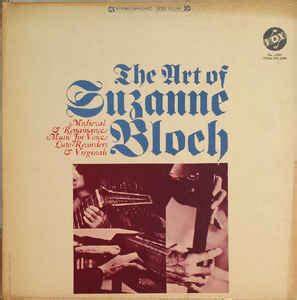
(1907 – 2002)
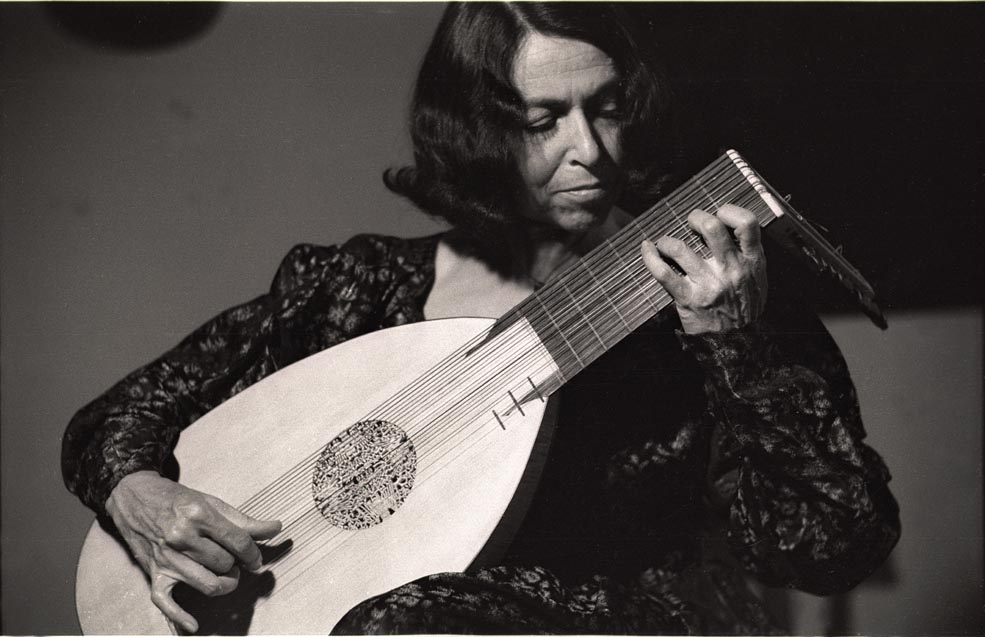
“To Suzanne Bloch’s recital at Conservatory, player of the lute, virginals, recorders & singer to the lute. An enormous audience.”
{November 5 1953}
Seventy years or so after recording his attendance at this concert, George reveals the artist he heard to me, his curious scribe. What a happy accident, to stumble upon a woman who gave so much of her working life to performing, teaching and research in the field of historical (especially Renaissance) musical performance – someone neither I, nor many people in my community of early music devotees, had ever heard of before.
To be sure, Bloch’s recital at the Royal Conservatory of Music in Toronto was also mentioned by Ezra Schabas in his history of that venerable institution “There’s Music In These Walls” (page 136):
“Dr. Johnson’s (Edward Johnson, board Chairman at the time) Special Events Series in 1953-54 brought … unusual attractions to the school in addition to more standard fare: lute, virginal, and recorder player Suzanne Bloch (whose) appearance was as interesting and exotic as Martha Graham’s of the year before …”
“Unusual, interesting, exotic” are adjectives that might well have applied to the work of Suzanne Bloch in the 1950s, a time when historically informed performance style was barely just beginning to awaken. Suzanne made important contributions to the field in America and was well appreciated and valued in her lifetime for her research and teaching. It turns out that one can find quite a lot about her, articles and references replete with laudatory descriptions of her accomplishments.
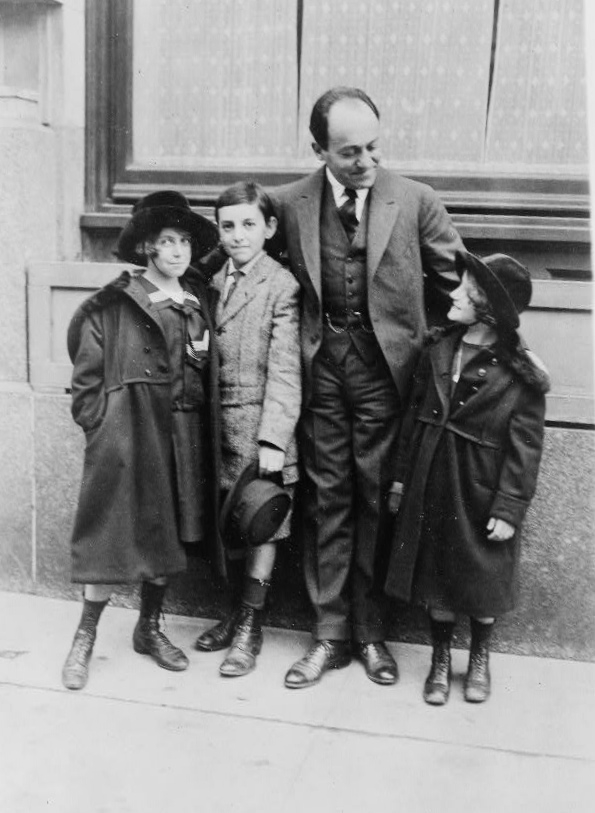
Born in Geneva, Suzanne moved with her family to New York in 1916 when her father, composer Ernest Bloch, began a series of conducting and teaching posts in American cities. Indeed, her father (whose love for his family shines through in the family portrait seen here) was a major influence in her life. Suzanne was the really musical one of his children, and he did his utmost to educate her in solfège and theory and to open her ears to music. She was eleven when her father first worked with choristers in America, a group comprised of enthusiastic amateur singers; he relied upon her to act as his librarian and even to add her youthful voice to one or other of the vocal sections as needed. At a young age she was exposed to such sixteenth-century polyphonic masters as Josquin, Lassus, Vittoria, Palestrina – composers beloved by her father – so it was no doubt inevitable that she should assimilate stylistic elements of this era into her musical understanding. Years later, she would write about her father’s influence in her musical development: “… Bloch realized that the best teachers were the greats of music, not textbooks. All of this would be important to his students. As a little girl, I received much of these ideas.” (Suzanne Bloch, in the Ernest Bloch Society website).
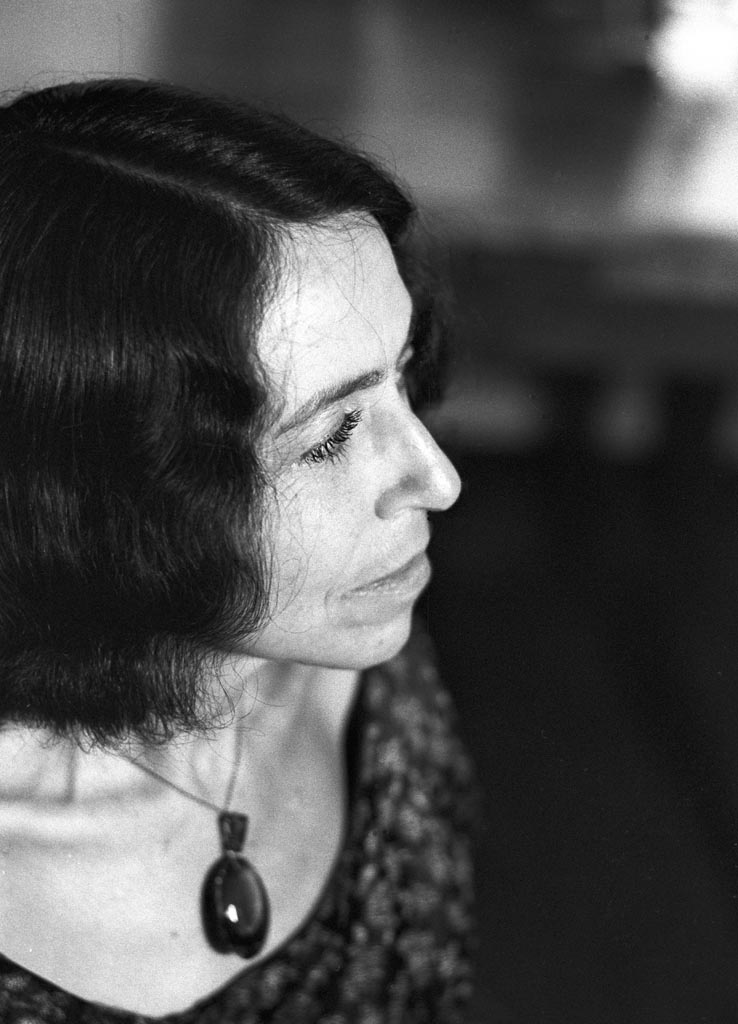
From the seeds planted in the days of her youth grew the two major disciplines of her life:
There is her dedication to preserving awareness of her father’s work. In just about every article or book devoted to the life, music and teaching of Ernest Bloch, you will find Suzanne’s name as a major contributor of information. He left his papers in her custody upon his death; eventually she deposited the pedagogical papers at the Sibley Music Library, Eastman School of Music, University of Rochester. Her obituary in the New York Times states that “She was the leading authority on her father’s music, and promoted it worldwide. She would often write the program notes to concerts of his music, collected voluminous clippings about him and began, but never finished, a biography.”
And there is Suzanne Bloch the early music specialist. As a young woman she was inspired by the lute (descendant of ancient Middle Eastern plucked instruments) which she heard in concert. She became fascinated with this instrument and the music written for it in 15th, 16th and 17th century Europe. The world opened up as she pursued studies, notably in England with musician and historical instrument maker Arnold Dolmetsch.
Suzanne became a proficient lutenist, also a player of recorders and virginals, a Renaissance specialist and a touring soloist. In 1966 she co-founded the Lute Society of America (still flourishing today as champion of the instrument and its music in all its varied forms, through performance, preservation, education and research). She taught various aspects of her subject at the prestigious Juilliard School of Music from the early 1940s to the late 1980s. It can be said that she was a pioneer; few others at that time focused intensely on bringing to life the music of the 15th and 16th centuries.
And so it seems, a life of commitment. Someone who recognized her duty and her muse, and did not refuse either calling.
Here is a series of four short recordings she made in the late 1950s. It’s true that scholarship and performance practice standards of today have advanced by leaps and bounds. Undeniably, Suzanne was one of those who enabled this advancement. I think I hear her say to the world unabashed, “Look what I’ve discovered!”
“As she performed, one had a sense of unfamiliar voices speaking again, not as if they were our contemporaries, but as if we were theirs.” (in the liner notes accompanying these recordings)
Click below to listen:
The Art of Suzanne Bloch Part I: Music for the lute
7 pieces dated from 1507 to 1603 (listed at approximately 0:18)
The Art of Suzanne Bloch Part 2: Music for solo recorder – sopranino, soprano, alto, tenor
Medieval and Renaissance (pieces listed at approximately 0:30)
The Art of Suzanne Bloch Part 3: Virginals and voice; songs to the lute
(pieces listed at approximately 0:22)
The Art of Suzanne Bloch Part 4: Music for Virginals
(pieces listed at approximately 0:23)